

This pre-prepared plan was put into action with the outbreak of the First World War and hospitals sprang up throughout the country in order to cope with the amount of casualties coming to Britain from Europe. With a mass evacuation of Antwerp, private houses and schools were turned into hospitals to cope with the numbers of wounded. Eight VAD hospitals opened in Cheltenham alone during the course of the war. The Wilson holds a number of items in its collection relating to these hospitals, from postcards and detachment badges, to albums owned by some of the nurses with entries of soldiers who were treated there.
In total 15,852 soldiers were treated in the VAD hospitals in Cheltenham by the end of the war. There were only 99 deaths.
Find out more about Leckhampton Court Hospital and New Court Hospital.

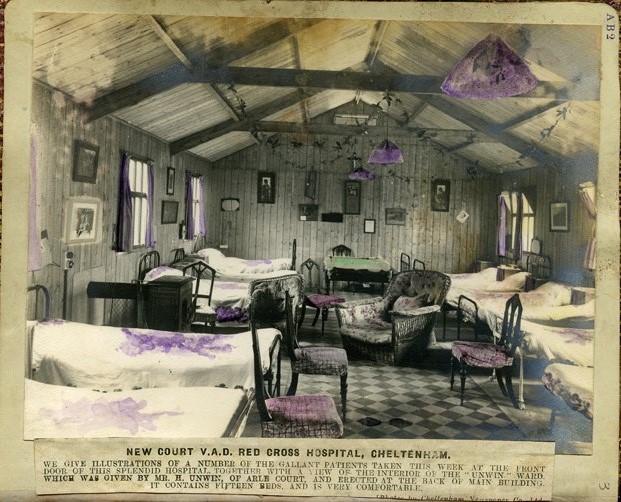
New Court was the first to open in Cheltenham. It was given only 12 hours’ notice to prepare for wounded Belgian soldiers coming over from the front lines. It opened on 21 October 1914 at Lansdown Place on the Lansdown Road. Originally a private house, it was offered to the War Office by its owner Mr J Flemming at the beginning of the war. It was staffed by Voluntary Aid Detachment number 16 and had treated 1,697 cases by the time it closed on 18 December 1918. One of the nurses, Dorothy Unwin, whose father donated a wooden structure for a new ward, owned a large book in which she asked the soldiers to write an entry. The book contains around 200 names with many messages, drawings, photographs and newspaper cuttings from the time.
Find out more about New Court Hospital.

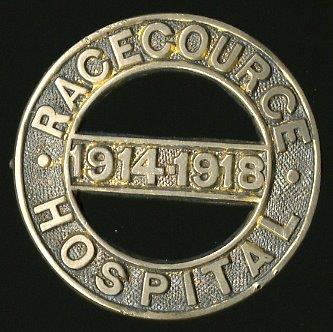
The next hospital to open was at the Racecourse which opened a week later on 28 October 1914 with 100 beds. It was staffed by Voluntary Aid Detachments numbers 14 and 18 and was in operation until 28 February 1919, during which time it had treated 3,169 patients. The buildings were well equipped for use as a hospital, with many balconies used for open-air treatment and the Tommy Atkins bar used as a recreational room. The hospital added more wards as the war went on. The Southam Ward was built in 1917 in the paddock area and Mr Unwin donated another wooden structure in 1918. By this time the hospital had a total of 200 beds, with an extra 20 for emergencies. The Wilson holds a small silver badge from this hospital which has the dates of the war. It was possibly given to the staff of the hospital at the conclusion of the war.

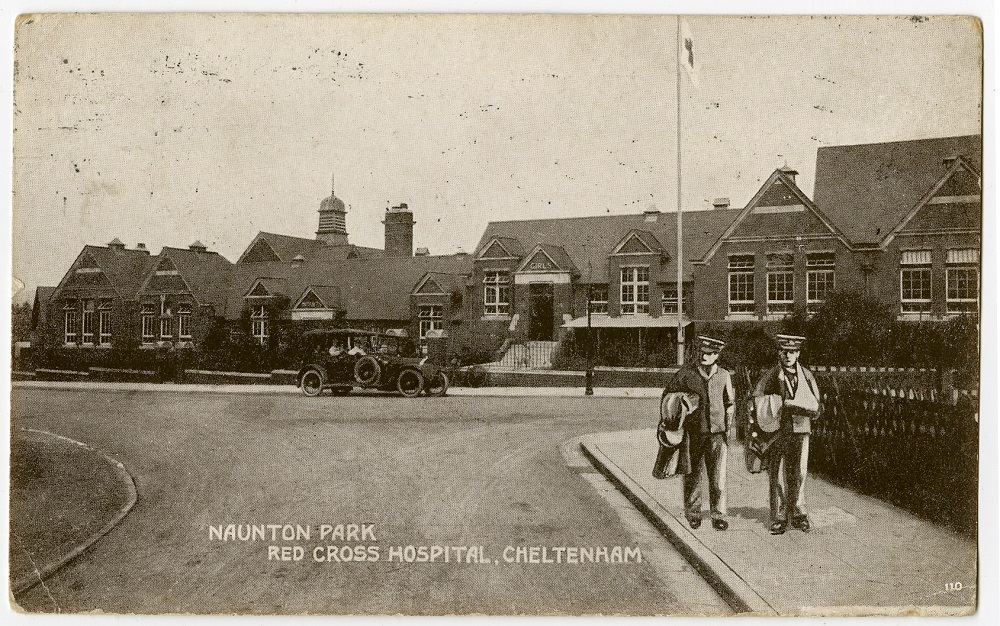
Soon others followed; a hospital opened at Moorend Park in Charlton Kings on 5 November 1914 before transferring to The Abbotts on All Saints Road in May 1915. The Hospital moved again in October 1916 to The Priory on London Road, likely to make space for casualties coming over from the battles of the Somme. Suffolk Hall on Lypiatt Road opened on 9 December 1914, Leckhampton Court on 7 February 1915. Hospitals at Naunton Park school, St Martins hospital at Eversleigh house and St John hospital at the Gloucester Road Councils schools, all opened in June 1915. All the hospitals opened with over 100 beds apart from Suffolk Hall which had 65 beds and St Martins, which had 40.

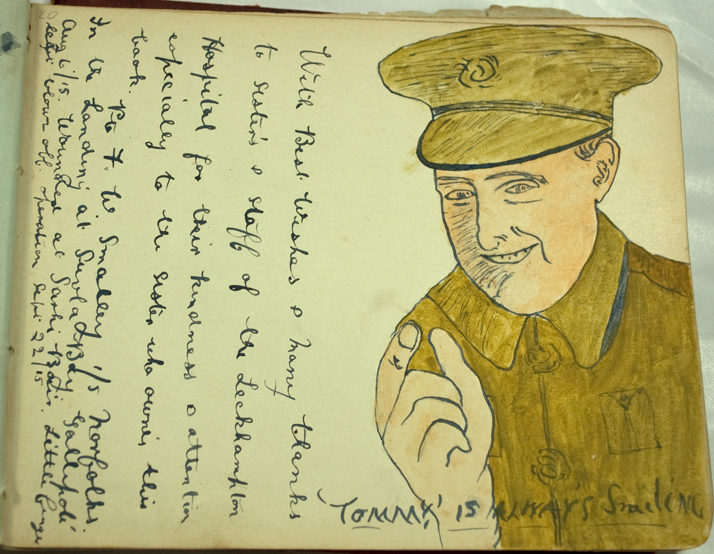
Today the Sue Ryder cancer care hospice, Leckhampton Court was given to the British Red Cross by Mrs Elwes and was ready for patients in November 1914, however, it was not used until the following February. It was staffed by Voluntary Aid Detachment number 42 and had treated 1,579 patients by the time it closed in March 1919. As with New Court the Wilson has one of the autograph albums from the hospital. It was owned by Miss Damaris Seddon. This book is smaller than the scrapbook from New Court but has around 70 names and contains many drawings and cartoons from the soldiers as well as messages to Miss Seddon.
Find out more about Leckhampton Court Hospital.
1989_992_3
The Unwin Ward at New Court Hospital, donated by Mr Unwin.
1992_98a
Postcard showing Naunton Park school while a VAD hospital.
2012_22_20
Page from the Leckhampton Court album showing a soldier's art.
racecourse-badge-1
Badge from the Racecourse.
Share this article
Follow us
A quick overview of the topics covered in this article.


