Schultz and Barnsley had travelled to Greece and Turkey in the 1880s and were experts on Byzantine architecture. This is the architecture of the Greek Orthodox Church in the Middle Ages in Greece, what’s now Turkey, and can be seen in some places in Northern Italy, such as Venice and Ravenna. Gimson didn’t visit Greece or Turkey, but he visited Venice and Ravenna in 1889.
It was an interesting design process. First Schultz sent a design with his idea for the chairs, and then Gimson adapted that, agreeing each stage with Schultz. They had to send the designs backwards and forwards by post, but the post was often very fast in the early 20th century. The friends had collaborated before, and their styles were very much in tune with each other and Sidney Barnsley, who designed the kneelers for the chapel.
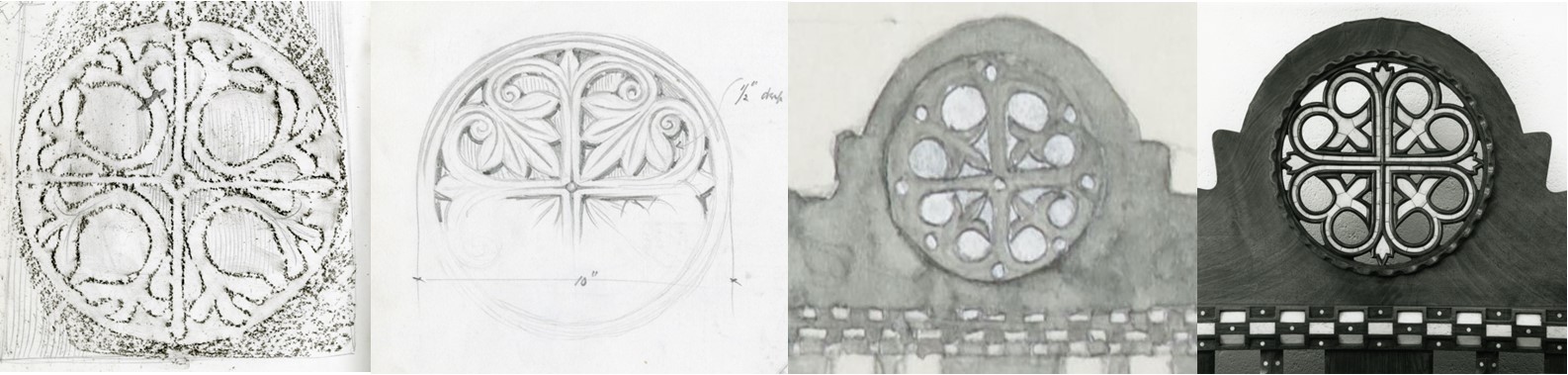
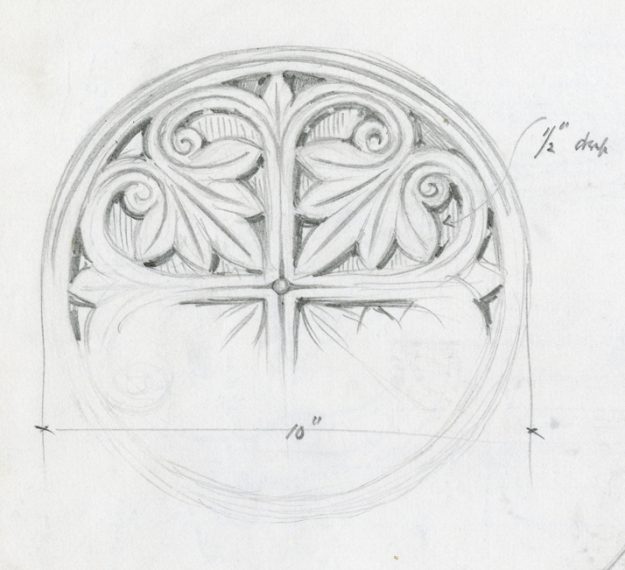
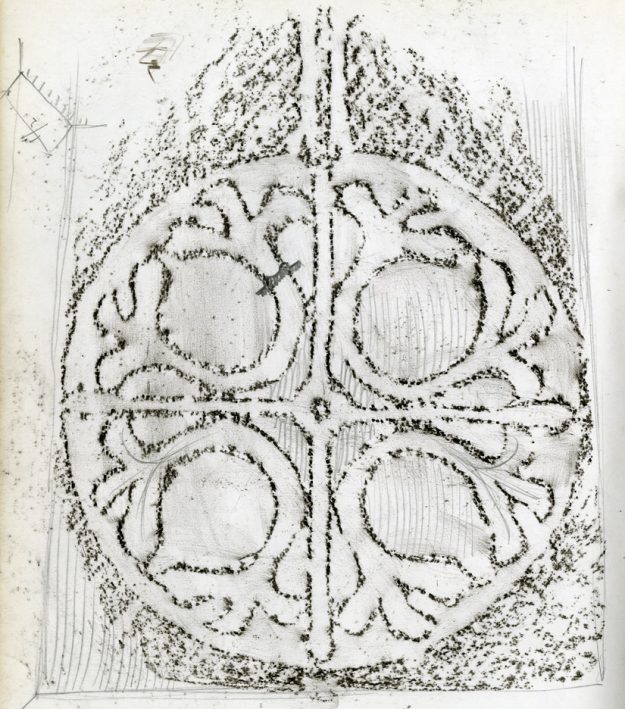
No doubt Gimson had seen the many photographs of Greek churches brought back by Schultz and Barnsley, but he had his own travels for inspiration, too. You can see influences from as far apart as Ravenna and Durham in the roundels at the top of each chair – they are all different.
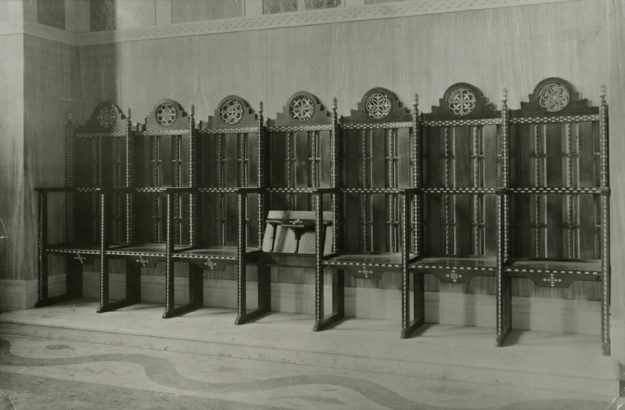
Making the furniture in ebony was very expensive, so Gimson had to get it right first time. To ensure he did, he made a prototype chair, finished to every detail, in the much cheaper wood, walnut. This is now in the collections held by The Wilson. It was bought by Robert Weir Schultz, and lived in his house in Hartley Wintney in Hampshire. When Sidney Barnsley’s son, the furniture maker Edward Barnsley, got married, they had the wedding reception at Schultz’s house, and the clergy chair was the bride, Tania Kellgren’s seat!
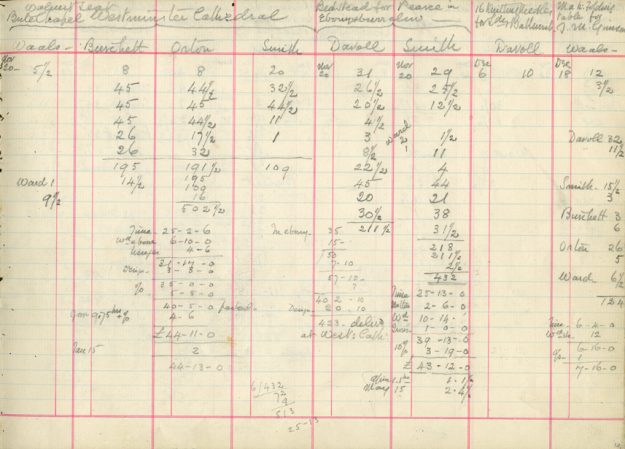
We are fortunate to have Gimson’s log book of the work done by the furniture workshop for this time. We know through this that there were four makers, Percy Burchett, Fred Orton, Ernest Smith and Mr Ward, all supervised by Gimson’s foreman, Peter Waals. It took them 502.5 hours to make the prototype, which cost £44.13.0. The seven ebony seats were estimated at £423 delivered, and took 3218.5 hours. They were finally installed in 1915, with Gimson writing to Schultz in July that year about his concerns: ‘We are trying to get the St. Andrews Chapel seats taken … , but the chances are against success in our workshop – the seats are now quite finished, but as Waals & the men are going to Cambridge for three weeks & the Chapel floor is not complete we will keep them here, till the end of the month – they look better for the few alterations [since] you saw them.’
1941_225_116-detail-625×570
Gimson sketched this carved stone in the Museum of Torcello, near Venice, in 1889. He reused the design for one of the roundels in the clergy seats.
1945_017-detail-625×709
He also took inspiration from nearer home - this rubbing of metalwork from a door in Durham Cathedral, sketched in 1888 also appears to have inspired him.
1941_222_059-625×469
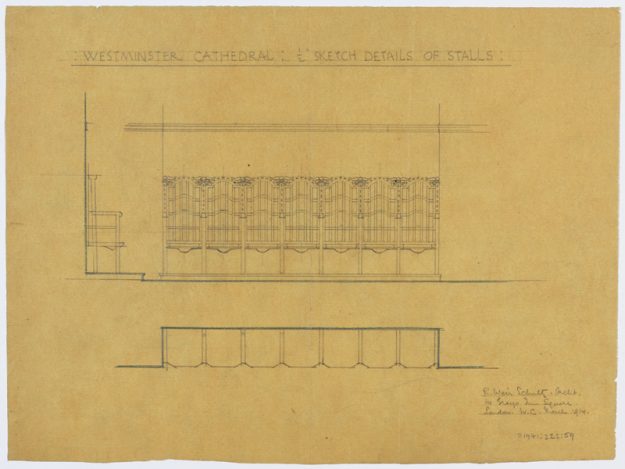
This design by Robert Weir Schultz was done in March 1914, and shows his initial ideas for the chairs.
1941_225_118_008-1-625×503
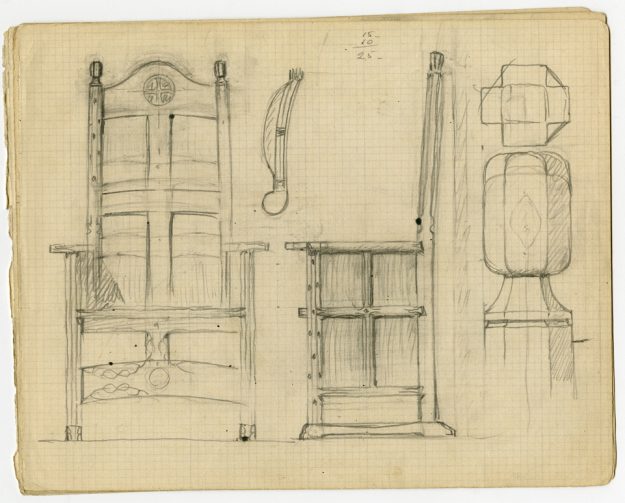
Gimson sketched this rough idea for a clergy chair in his working sketchbook - it may relate to his design process for the Westminster chairs.
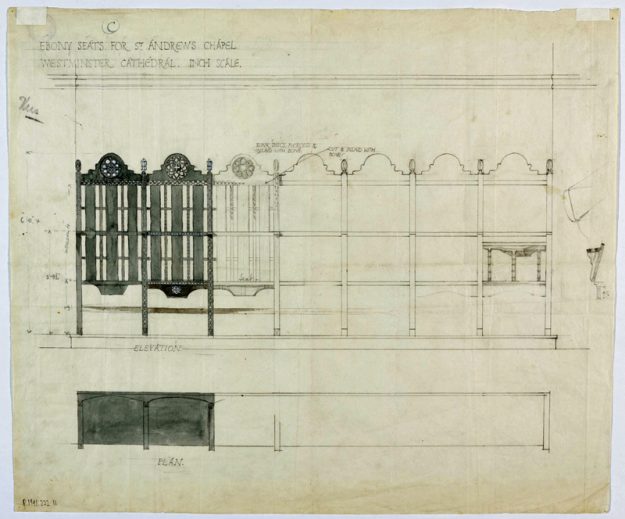
1941_222_11-625×519
This is Gimson's worked up design for the clergy seats. You can see it is rather different to Schultz's initial design, but there are still similarities.
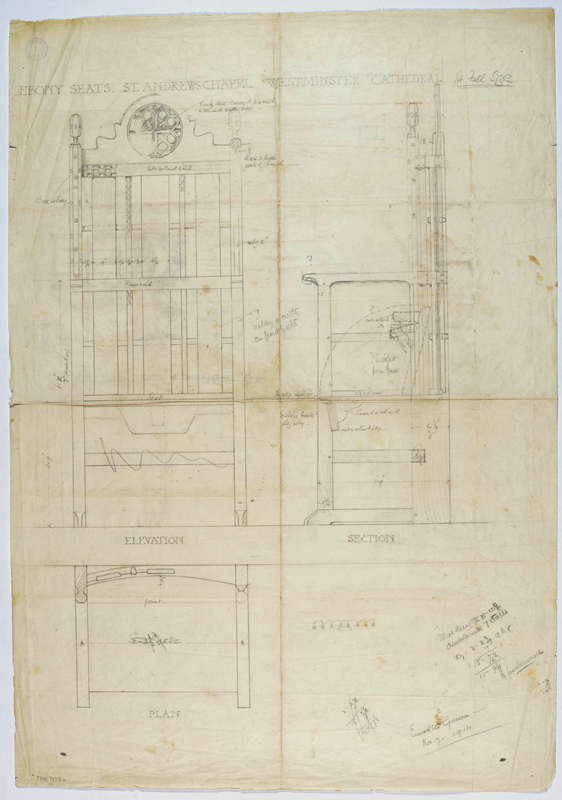
1941_222_11_001
This measured drawing, a quarter of full size, shows all the details of the chair complete by 7 November 1914.
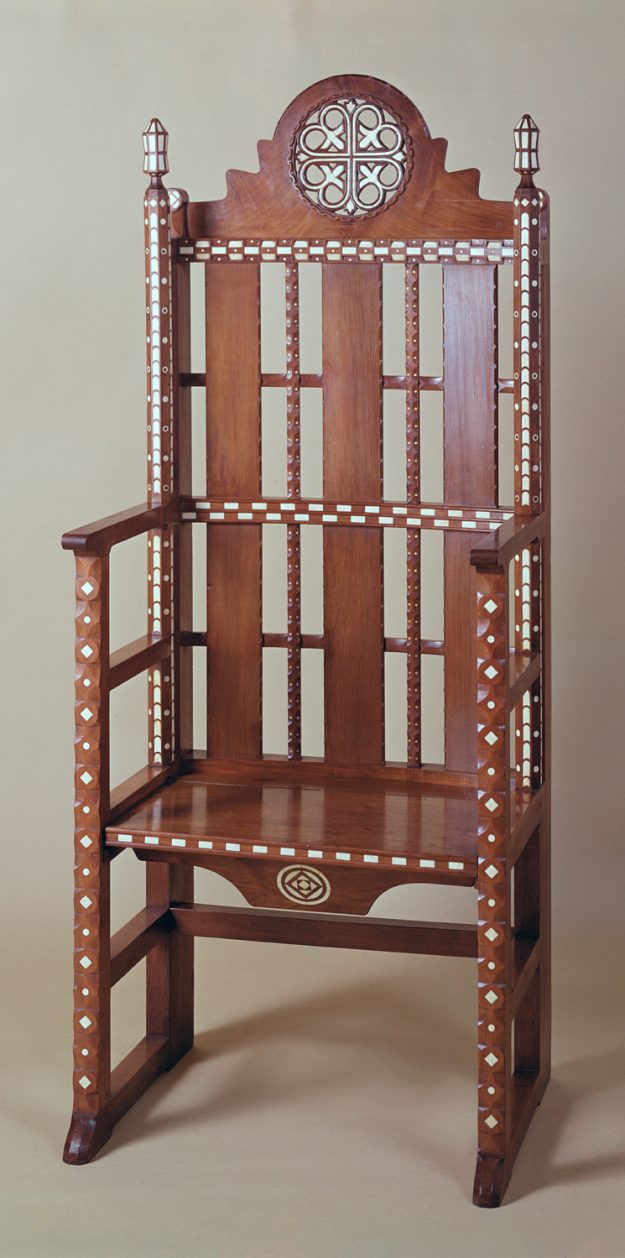
1970_47-625×1258
This is the prototype chair. Work started on this in November 1914, once the measured drawing was done.
1941_225_121-625×449
This is the page from the job book that shows the calculations per maker, of the time spent on the prototype chair. Gimson then worked out how much it would cost.
Share this article
Follow us
A quick overview of the topics covered in this article.


