
The Cheltenham StoryCheltenham and the Slave Trade
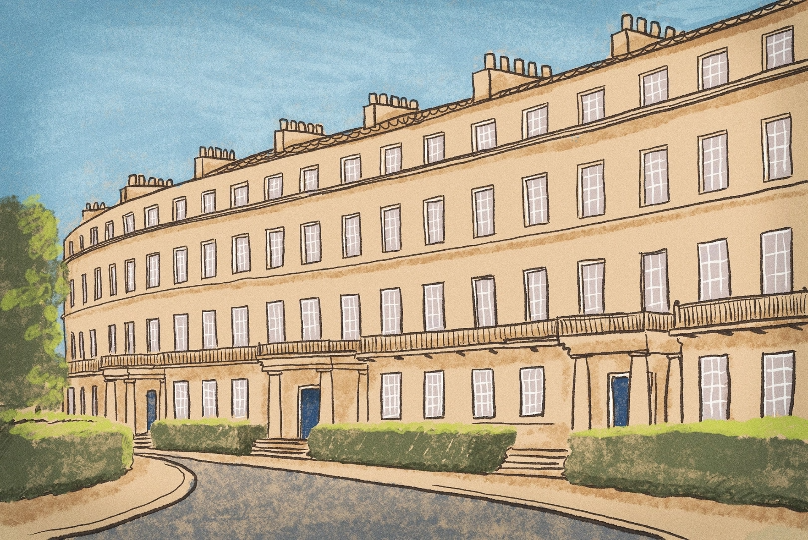

Lansdown Crescent is a road consisting of Grade II listed Georgian classical-style houses designed by renowned architects Robert and Charles Jearrad. It can be found in the traditionally wealthy area of Lansdown. An imposingly beautiful crescent of houses, it was also home to several recipients of compensation following the abolition of the slave trade.
Britain first became involved with the transatlantic slave trade in 16th century when privateer John Hawkins, profited from selling African people into slavery. This involvement continued to increase especially during the 1700s, with the trade reaching its peak in the 1780s. The 1700s also saw the rise of the abolitionist movement in Britain, spearheaded by Quaker anti-slavery groups and William Wilberforce, a member of parliament. Wilberforce was eventually assisted by Hannah More and Granville Sharpe, other prominent anti-slavery activists, founding the Anti-Slavery Society. In 1789, a former enslaved person Olaudah Equiano, who had bought his own emancipation in 1766, published his book ‘The Interesting Narrative of the Life of Olaudah Equiano’. The book gave graphic first-hand descriptions of the appalling suffering the enslaved African people were forced to endure, helping to turn further public opinion against the slave trade. After several failed attempts by Wilberforce, parliament finally passed the Act to Abolish the Transatlantic Slave Trade in 1807.
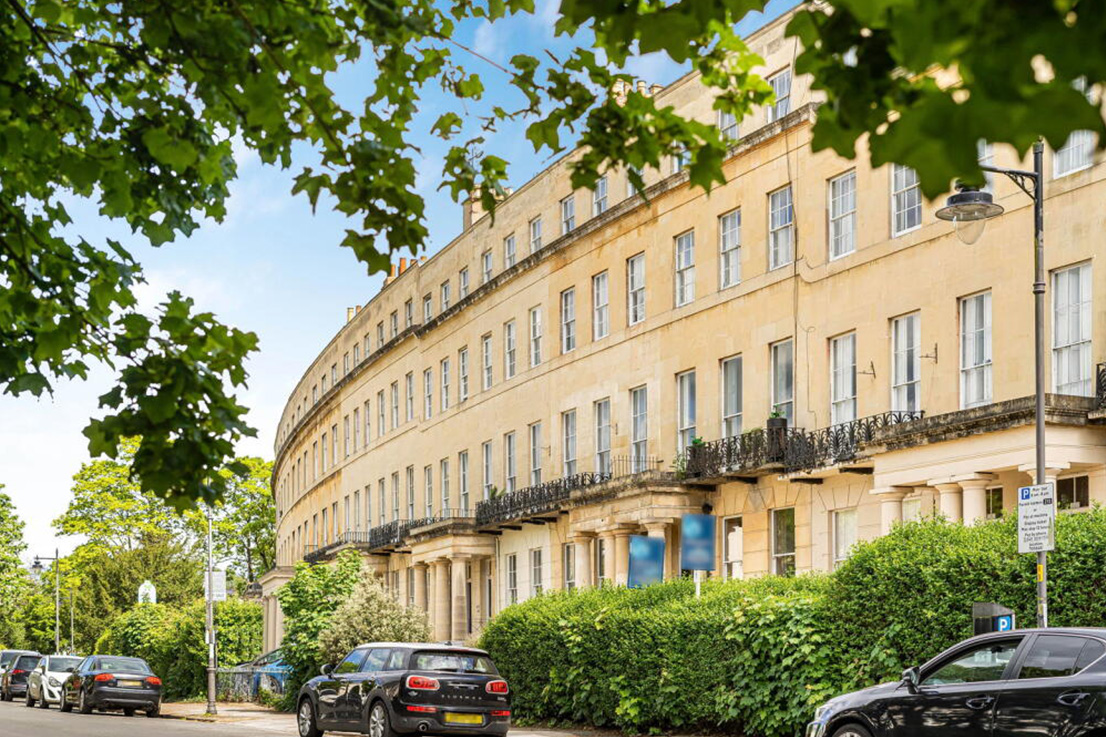
Lansdown Crescent, Cheltenham
Cheltenham had its own anti-slavery movement. The Assembly Rooms on the High Street, now the site of Lloyds Bank, hosted several large gatherings to debate the morals of slavery. Cheltenham’s first MP, Craven Fitzhardinge Berkeley who was elected in 1832, petitioned parliament on behalf of the Cheltenham Abolitionists. Britain’s leading abolitionist, George Thompson, also came to the Assembly Rooms to give a talk.
It took a further 26 years for the Slavery Abolition Act 1833 to be passed (although slavery wasn’t fully abolished in practice until 1838). Following this act, the British government paid out £20million (around £17bn today) to compensate 46,000 slave owners for loss of ‘property’ - 391 awardees were from Gloucestershire, 61 were from Cheltenham alone, spread across the town including, but not limited to, the Montpellier and Pittville areas in addition to Lansdown.
By far the biggest recipient in Lansdown Crescent was William Alnwick Hamer, who was compensated for 456 enslaved people in British Guiana, for which he was paid £22,846 1s 1d. Edward Kendell, who received compensation amounting to £1303 6s 7d for 59 enslaved people in Dominica. It wasn’t just men; travelling further along to Lansdown Terrace, Eleanor Jopp was paid £283 19s for 14 enslaved people in Jamaica.
This therefore demonstrates that a large portion of the wealth used to build Cheltenham during the Regency period came from the town’s association with the slave trade. It also shows the conflict between social groups in Cheltenham over an issue which is the gravest crime against humanity. There is more work to be done to assess the full impact of the Slave Trade on the town.
Please note that the properties mentioned in this story are in private ownership, and the occupiers have no relation to the individuals mentioned. We ask that their privacy and property be respected.

Things to see nearby
Queen Victoria Penfold post box
Located on Lansdown Road sits one of eight rare Queen Victoria Penfold Post Boxes. Named after their designer John Penfold, these post boxes differ from the norm by their shape - being hexagonal rather than round. Installed in the town in 1866, eight are still in use (one is held in The Wilson Museum’s collection), despite being some of the earliest installed anywhere in the country. Only 92 of them are found across the UK, so having eight in one town is a rarity.
Christ Church Cheltenham
Christ Church is a stunning example of Regency Gothic Revival architecture, built to serve the growing population of Cheltenham in the first half of the 19th century. Designed by architects Robert and Charles Jearrad, who also designed the Queens Hotel. The church had many alterations and additions added in 1888 and 1893, which included the installation of splendid Byzantine-style decorations.
Heritage Index
Interested in discovering more about the history of Cheltenham? Explore our Heritage Index for a rich collection of research, stories, and resources to help you continue your own journey into the past.
Thanks for our partners and sponsors