
The Cheltenham StoryHolst Victorian House
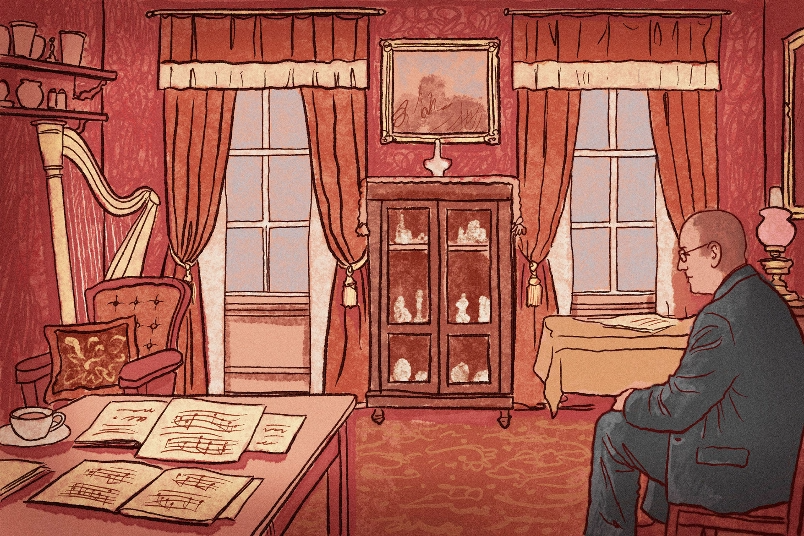

4 Clarence Road is the birthplace of one of Cheltenham’s most famous residents, Gustav Holst. Built in 1833 and originally known as 4 Pittville Terrace, this handsome Regency house was where Holst was born on 21 September 1874. He lived here until 1882, when, at the age of seven, his family moved from the house following the death of his mother.
Holst attended Cheltenham Grammar School from 1886 to 1891, which was then located on the High Street, where he began composing music. He later studied at the Royal College of Music in London. The move to London was expensive, especially after Holst had missed out on a scholarship. To save money he became a vegetarian and gave up alcohol.
He is most famous for his orchestral suite The Planets, especially the movement “Jupiter,” whose soaring melody later became the hymn “I Vow to Thee, My Country.” He also composed the much-loved 1906 tune for “In the Bleak Midwinter.” Holst’s music was influenced by composers such as Richard Wagner, and by his close friend Ralph Vaughan Williams. He became one of Britain’s best-loved composers.
Holst Victorian House
From 1905 until his death in 1934, Holst served as director of music at St Paul's Girls' School in London, inspiring generations of young musicians. In 1917, he and his family moved to Thaxted in Essex, where he founded the Whitsuntide Festival. Celebrated during the 1920s in London churches and in Canterbury and Chichester Cathedrals, the festival continues today in his honour as the Thaxted Festival.
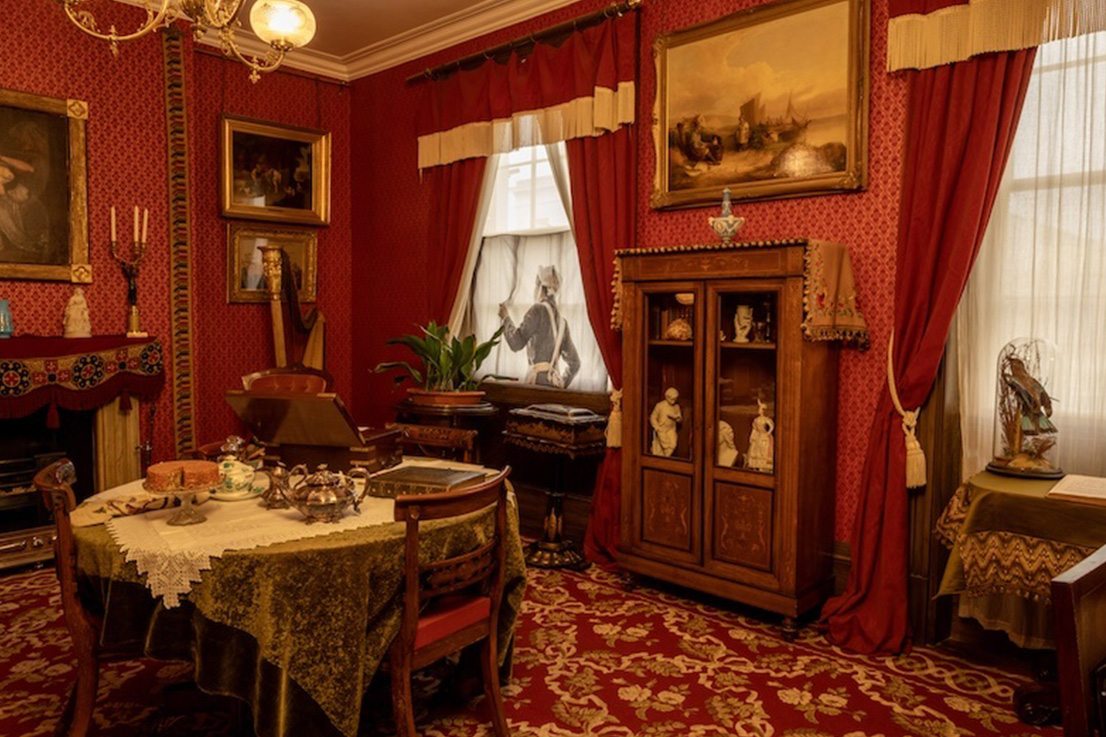
Holst came from a remarkable musical and artistic family. His father, Adolph von Holst, was a professional musician and served as organist and choirmaster at All Saints’ Church in Cheltenham. His great-grandfather, Matthias Holst, was a composer and harp teacher at the Imperial Russian Court in St Petersburg. His brother, Emil Gottfried Holst, became a successful actor in the West End and Hollywood under the stage name Ernest Cossart. Holst’s great-uncle, Theodor von Holst, was a celebrated Pre-Raphaelite painter, and several of his works can still be seen in the house today.
Today, Holst Victorian House not only tells the story of Holst’s life and music. It also displays the piano he owned while living in Thaxted, his gramophone and his Arts and Crafts music chest -bringing visitors closer to the sounds and stories of this quiet but remarkable composer. Visitors to the house have 8 period rooms to explore, including an impressive Regency drawing room and a kitchen with a working range, which tell the story of the Holst family, and some of those who have lived there subsequently. There are also regular music events and children’s activities during the school holidays.

Things to see nearby
Pittville Gates
Built in 1833 by Joseph Pitt’s then favoured architect Robert Stokes, Pittville Gates were designed as the grand entrance to the Pittville Estate. The ornamental arch was added later in 1897. Measuring an imposing almost 4 yards high and 22 yards wide, the gates are held up by six Forest of Dean stone pillars and are made up of two carriage gates and two pedestrian gates. The invention of the motorcar saw considerable damage to the gates (designed for horse drawn carriages). This led to the eventual closure of Pittville Lawn as a through road, which now contains two information boards on the history of the area. The gates were lit by permanent lamps (likely to have been oil at first, as gas was not installed in the area until 1839), two of which, displaced by the central arch, are now found either side of the entrance to the Municipal Offices. Pittville Gates and the surrounding area were restored by a project led by the Friends of Pittville between 2011 and 2015. Find out more.
Pittville Circus Road ghost house
‘St Annes’, on the corner of Pittville Circus Road and All Saints Road, is home to one of the most famous ghost stories of the Victorian era. The Despard family who lived there in the 1880s claimed to see a woman dressed all in black. She was in fact seen by 17 different people in total and was believed to be Imogen Swinhoe, the wife of the original owner. The ‘haunting’ was investigated by the Society for Psychical Research in London, the first investigation of its kind anywhere in the world. The story became the inspiration for Dame Susan Hill’s 1983 novel ‘The Woman in Black’, the play adapted by Stephen Mallatratt of the same name, and the 2012 feature film. Please note that this property is in private ownership, and we ask that their privacy and property be respected.
Heritage Index
Interested in discovering more about the history of Cheltenham? Explore our Heritage Index for a rich collection of research, stories, and resources to help you continue your own journey into the past.
Thanks for our partners and sponsors