
The Cheltenham StoryPittville Park Tree Trail
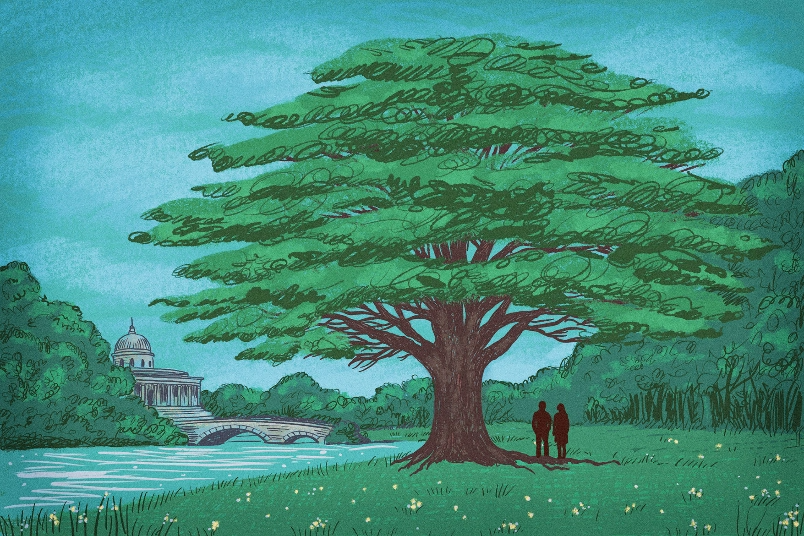

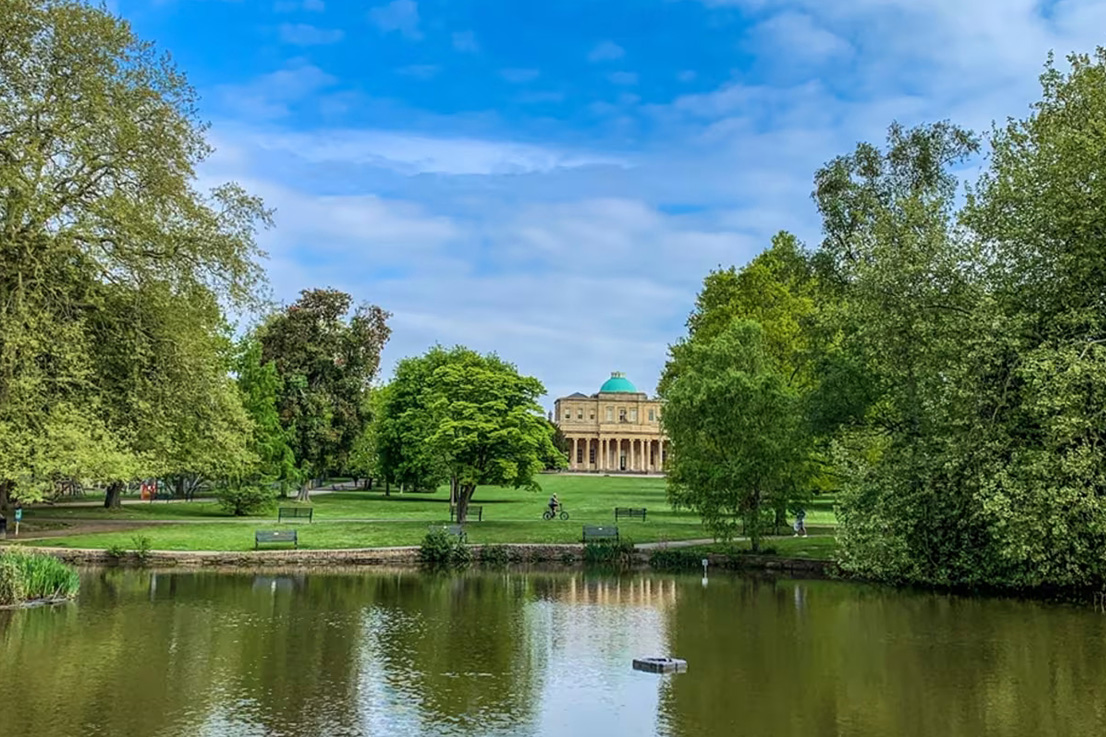
Pittville Park is Cheltenham’s largest ornamental park and was first established by Joseph Pitt in 1825. Pitt, a Cricklade MP, wanted to create his own spa town to rival Cheltenham, the centrepiece of which was the park complete with a pump room and ornamental lake. The park itself first opened in 1825, as private gardens where visitors had to pay a 5-shilling monthly subscription to access the walkways. This changed when Cheltenham Borough Council purchased the park and Pump Room in December 1890. The park has been open to the public since 1894, with payment still required for the formal east section, except for Sundays, until 1954, when the entire park became free to access. During the Second World War, American troops were stationed in the Pump Room and Nissen huts were constructed on the lawns, restricting that area of the park between 1942 and 1946.
The park has been used for many public activities and celebrations through the years. Early attractions included Mr Blackmore who walked a tightrope wire 40 feet above the lake, and Van Amburgh’s Menagerie, which included elephants swimming in the lake! As the 20th century progressed, the park was used for more sporting events. The lake had always been used for boating and fishing in the summer and ice skating in the winter, but this now included water polo and swimming. There were also several pageants and parades, often involving people dressed in historical costumes and putting on plays. In 21st century, the park hosts an annual Christmas light switch on, as well as outdoor concerts and community events.
Pittville Park Tree Trail
The park is separated into two sections: the Eastern side, containing the Pump Room, the main ornamental lake and the fantastic children’s play area, and the western side which is more natural containing small, wooded areas, the tennis courts, and the boating lake. Both are planted with an extensive and beautiful collection of native and exotic trees, most of which were probably planted in the 1890s when the council bought the grounds. Some of the more recognisable trees include the horse chestnut, common oak, and yew trees, but there are some other impressive international examples. The eastern side of the park contains the largest example of the American Pencil Cedar in the country, and a beautiful and unusual Strawberry Tree, native to Ireland and the south Mediterranean. The Strawberry Tree is prized by furniture makers as a veneer wood for its deep orange colour. The western side of the park contains Ginkgo trees, originating from China and brought to England in 1754. Ginkgo trees have existed for more than 200 million years, so would have been regular food for many dinosaurs. This side of the park contains two fragrant trees; the California Incense Cedar which is actually a cypress tree whose wood smells like cedar, and the Liquidambar, another American tree whose maple-shaped leaves are extremely fragrant when crushed.
Find out more about the Friends of Pittville and Cheltenham Borough Council’s two tree walks, encompassing both sides of the park.
The trees in the park are also part of Cheltenham Borough Council’s tree strategy, creating a greener, healthier and more sustainable environment for the community.

Things to see nearby
Pittville Pump Room
Opened on 20 July 1830, the Grade I listed Pump Room was the shining jewel in Joseph Pitt’s grand estate and now has the only surviving spa pump in Cheltenham. The design of the building was based on ancient Greek and Roman architecture, with the dome inspired by the Pantheon in Rome. It has three statues on the roof: Asclepius the Greek god of medicine, Hygeia the Greek goddess of health, and Hippocrates, the Greek philosopher known as the ‘Father of Medicine’. When it first opened, people were charged 1 shilling to take the water, which illustrations at the time suggest was an effective laxative. Once Cheltenham Borough Council bought the Pump Room, it was used to house sporting events like roller skating, badminton and tennis. It was home to American troops from 1942 to 1946. In more modern times it has been home to The Gloucestershire College of Art and a fashion museum. Run by The Cheltenham Trust since 2014, the Pump Room has recently undergone extensive restoration work to the floor.
St Paul’s Church
From the western side of the park, travelling south down Tommy Taylors Lane and then onto Folly Lane you will arrive at St Paul’s Road. Continue east, and you will find the impressive St Paul’s Church, built in a Greek Revival design. The first ‘free’ church in Cheltenham, it was initiated by Reverend Charles Jervis in 1825. Jervis wanted to build a church for the ‘artisan classes’ in the poorer area of Cheltenham. The land was donated by Joseph Pitt, and the architect, John Forbes, also designed Pittville Pump Room. The church was completed in 1831, with 1230 seats for people to attend church with no charge, at a time when many churches charged the congregation to secure a seat. The building was refurbished in 1863, 1906, 1917, 1932 and most recently in 2009. It is a beautiful, well-lit and spacious church, which is Grade II listed. The church is open for events most days, please check their website before visiting to avoid disappointment.
Heritage Index
Interested in discovering more about the history of Cheltenham? Explore our Heritage Index for a rich collection of research, stories, and resources to help you continue your own journey into the past.
Thanks for our partners and sponsors