
The Cheltenham StoryCheltenham Playhouse
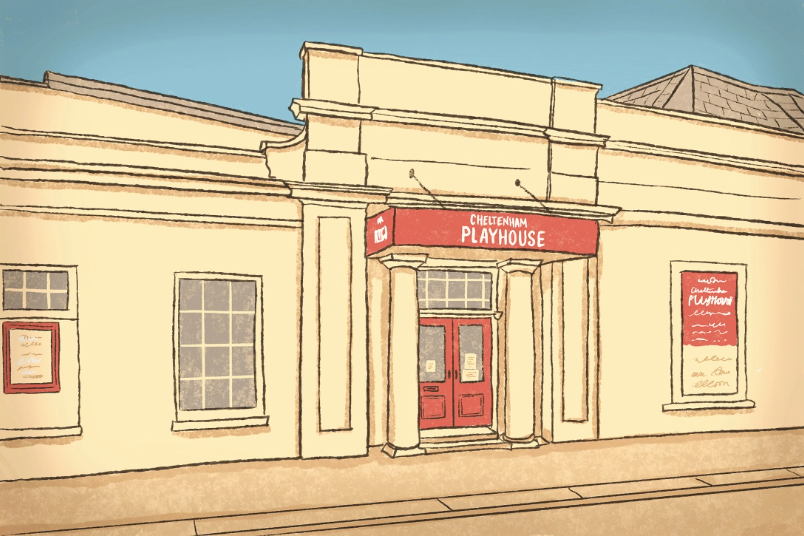

First built in 1806, the building which currently houses the Cheltenham Playhouse began life as Montpellier Baths. Henry Thompson, a wealthy London merchant who owned the land containing Montpellier and the Lansdown areas, purchased land from Reverend Delabere which he used to build the baths on. The building included a public bathhouse and a laboratory, which is why the building had a large chimney. The building at first had six baths, an early type of steam room known as a sudatory, and a self-administering enema machine. Salts created to add to the waters there, using the laboratory, were branded and sold as ‘The Real Cheltenham Salts’, available to purchase both in Cheltenham and beyond. These salts were created by using on-site pits to evaporate the mineral waters, collecting the salts left behind. They were popular to buy because they had a strong laxative effect. At a time when purging was considered healthy – it was publicised that Cheltenham waters would give ‘two good movements a day’.
The site was expanded in the 1820s, and in 1828 The Duke of Wellington, who was at the time Prime Minister, visited at 4pm every day for two weeks. By 1836, the site had added a steam-driven flour mill and bakery, which was powered by the energy used to run the boilers for salt manufacturing. A swimming pool was added in 1847, which was sometimes covered with boards to turn the space into a gymnasium. The site was bought by The Corporation of Cheltenham in 1899. It was closed for a year for refurbishment, parts of which were completed by local firm H. H. Martyn, famous for creating interiors for the big Cunard and White Star cruise liners at the time. However, by 1939 the space was failing to make a profit – despite the offer of treatments such as a radioactive mud bath – and the baths were closed. The building became an Air Raid Precautions (ARP) centre and a base for St John’s Ambulance.
Cheltenham Playhouse
In 1944, town clerk Frank Littlewood, whose father was editor of The Stage magazine, began a campaign to open the space as a theatre for local amateur theatre groups. Theatres and cinemas had initially been closed in 1939, when there was fear of the damage bombs could do to visitors and those congregating outside. They gradually reopened once seen as essential for improving morale. The baths and swimming pool were covered, and the Civic Playhouse was opened in April 1945, making it one of, if not the only theatre in the UK to be newly established during the wartime period. The first play was performed that month, a production of George Bernard Shaw’s ‘Arms and the Man’. Treatments and plays both found a home in the space up until the 1970s, when the baths and pool ceased to be used.
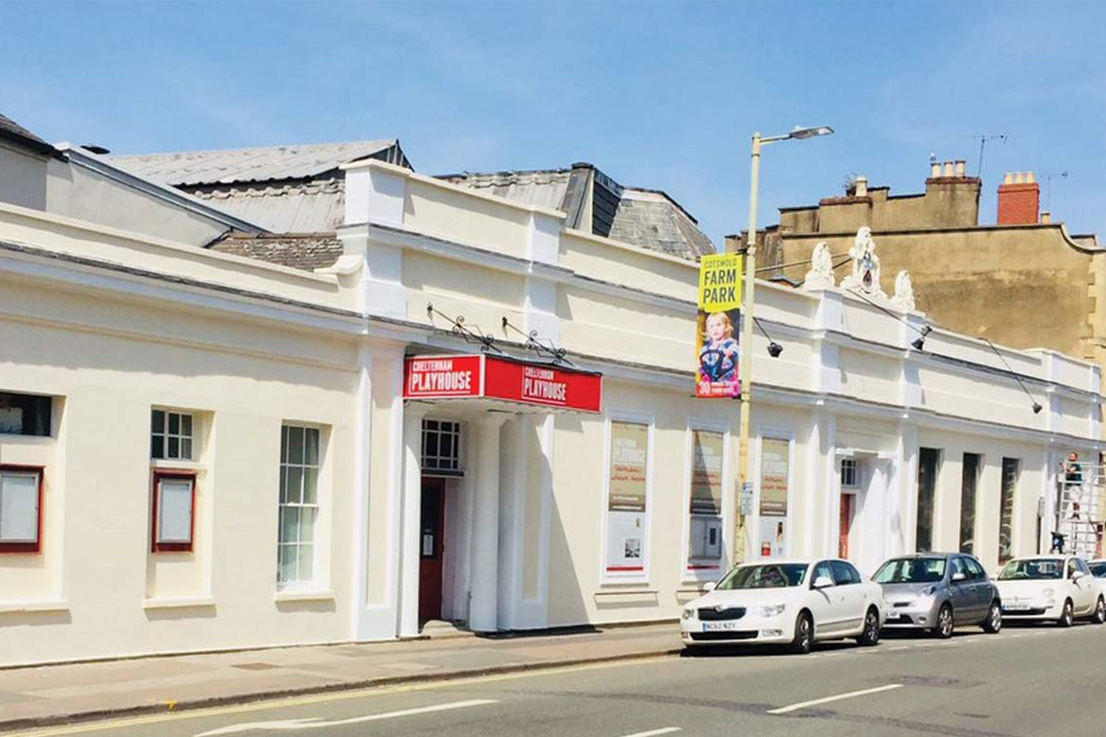
The swimming pool remains in place to this day, used as furniture stores and are sometimes accessible to the public to view on specialist open days. The inside looks much the same as it did at the start of the 20th century, minus some features such as the glass ceiling which was lost in a fire in the 1950s. Today known as Cheltenham Playhouse, the theatre is composed of 186 seats and operates as a registered charity, working with an aim to make performing arts accessible and affordable for all. The space is used for a variety of performances, including providing a stage for many local theatre groups, alongside the yearly Christmas Panto and Cheltenham Fringe Festival. Both The Playhouse and The Everyman Theatre found in Regent Street play a crucial role in providing quality cultural entertainment for the town.

Things to see nearby
Eagle Tower building
Opened in 1968, and standing at a whopping 49.07m and 15 floors high, Eagle Tower is the perfect example of 1960s brutalist architecture. Built for Eagle Star (now part of Zurich), the building was controversial from the start as it required the demolition of three Regency villas, one of which was ‘Westal’ home of the Wilson family (including Edward Adrian Wilson) from 1874 until the 1930s. The tallest building in Cheltenham, it offers unparalleled views of the town and surrounding area, and before mobile phones served as a key navigational aid for people meeting in the town centre due to its clear visibility. Nestled among the more decorative Regency buildings it demonstrates how the architectural styles of Cheltenham have evolved through the centuries.
Cheltenham Lido
The Keynsham Road end of Sandford Park is home to Cheltenham Lido; an Art Deco outdoor pool built in 1935. It is a rare example of a mostly intact 1930s pool building including the original turnstiles and plant rooms. The Olympic length pool, which is heated, is 50m long. This resulted in the pool being used by the Malawi Olympic swimming team to practice for the 2012 London Olympics. The Lido cost £15,700 to construct (around £1.2M today) and has stayed open every year since it was completed. This includes through the Second World War, the opening of the town’s indoor pools in the 1970s, and the financial crises in the 1980s and 2000s. The Lido underwent a major refurbishment and sustainability project in 2006, financed by a local ‘buy a brick’ campaign and the Heritage Lottery Fund, and is currently run by a charity. It is Grade II listed, and one of only 98 Lidos left in the UK. Please note that there is a charge to enter the Lido.
Heritage Index
Interested in discovering more about the history of Cheltenham? Explore our Heritage Index for a rich collection of research, stories, and resources to help you continue your own journey into the past.
Thanks for our partners and sponsors