
The Cheltenham StoryElephant Stampede
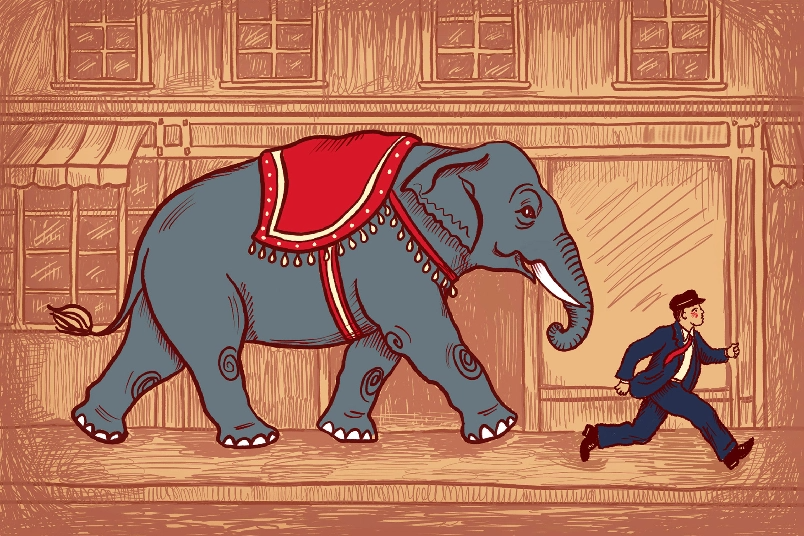

On 26 March 1934, Albion Street was host to one of the strangest events to ever occur in Cheltenham. Chapman’s Circus was in town, and the handlers were parading their three elephants through the streets. It was lunchtime, and clearly the elephants were hungry, because as they passed Bloodworths and Sons, a seed and pet store, they suddenly broke into a stampede. One ended up completely inside the shop, whilst another blocked the doorway, preventing the handlers from getting inside to shoo them out. The manager of the business, Mr T.W. Goodhall, was in the shop when this happened - it must have been quite a shock to look up and see an elephant eating all the seeds and dog biscuits! Once the handlers were able to get inside, it took them 5 minutes to get the elephants out. Amazingly, other than eating a lot of the merchandise, the elephants did not do much damage.
Animals in circuses in the early 20th century were not treated well. They were usually kept in cramped conditions, and forced to perform through fear or cruelty, being controlled by whips, sticks and electric prods. They were moved from place to place in poor, confined cages, often with chains attached. Disease spread easily through the animals, who often died far more prematurely than their wild counterparts. It is perhaps then no surprise that when given a chance of freedom and extra food, the elephants jumped, or stampeded, at the opportunity.
Elephant Stampede illustration
Bloodworths is believed to be the oldest pet store in the UK, founded in 1842 by James Bloodworth, eventually expanding to have two additional shops in Gloucester and Winchcombe. The Bloodworth family continued to run the stores until 1972, when it was sold to Mr H Crawford, who still owns the business today. It merged with Newmans Hardware Store, founded in 1909 and also bought by the Crawford family in 1980. Newmans and Bloodworths still exist and can now be found at 180 Bath Road.
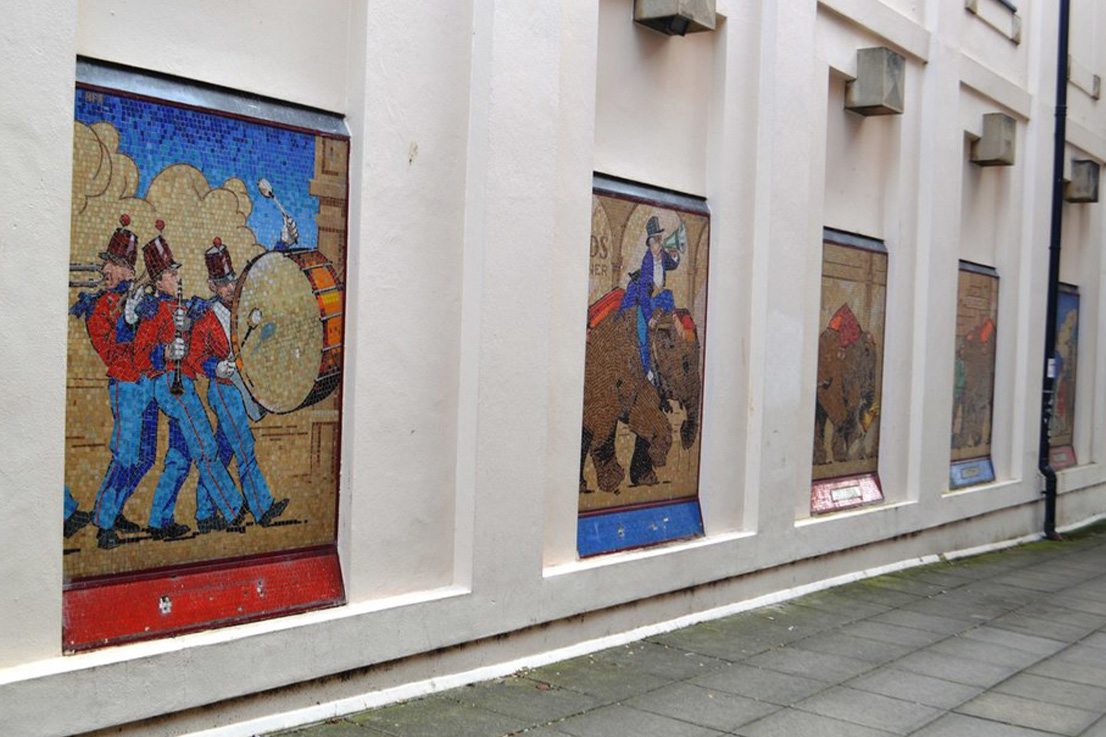
The elephant stampede is remembered in a series of 5 mosaics located in the alleyway that connects Grosvenor Place South and the High Street. The mosaics were created in 1993 by Tim Turton and Nick Robertson and are made of a total of 90,000 individual tiles. Cheltenham Business Improvement District (BID) had the mosaics restored in 2025 to remove graffiti and bring back the vibrancy of the tiles, using tiles from the original artist. There is actually a mistake in one of the mosaics – can you find it?

Things to see nearby
The Vine
Located on the corner of where the High Street meets St James’ Street, The Vine is a classic example of Edwardian public housing architecture. Initially named The Coopers Arms, the earliest building was rebuilt in 1909 by the Cheltenham Original Brewing Co Ltd following a fire. The exterior of the building was covered in decorative green and brown tiles, fashionable colours at the time. Tiles were commonly chosen for use in industrial cities like London and Birmingham as the pollution from industry could easily be washed from them and they served as an early form of pub marketing.
Sandford Park
Sandford Park is one of the most beautiful parks in Cheltenham. Running from Keynsham Road to Bath Road, it is divided into different sections. The sections include an open playing field, an Italianate formal garden complete with a sunken pool, a community vegetable and herb garden and the Sanctuary Garden provided by the hospital LINC blood cancer charity. The foot and cycle path runs alongside the River Chelt, and the beautiful cascade pools attract lots of wildlife including kingfishers. The park contains the Whish Sisters Fountain, a drinking fountain commissioned by sisters Mary, Ellen and Anne Whish to mark their 50 years of living in the town. It was moved to its current location in the park in the 1920s. The park was once home to Sandford Mill, a water-powered mill which may have been one of two Cheltenham mills mentioned in the Domesday Book. It has certainly existed since the early Middle Ages, and an old millstone can still be seen on display.
Heritage Index
Interested in discovering more about the history of Cheltenham? Explore our Heritage Index for a rich collection of research, stories, and resources to help you continue your own journey into the past.
Thanks for our partners and sponsors