
The Cheltenham StoryThe Minster
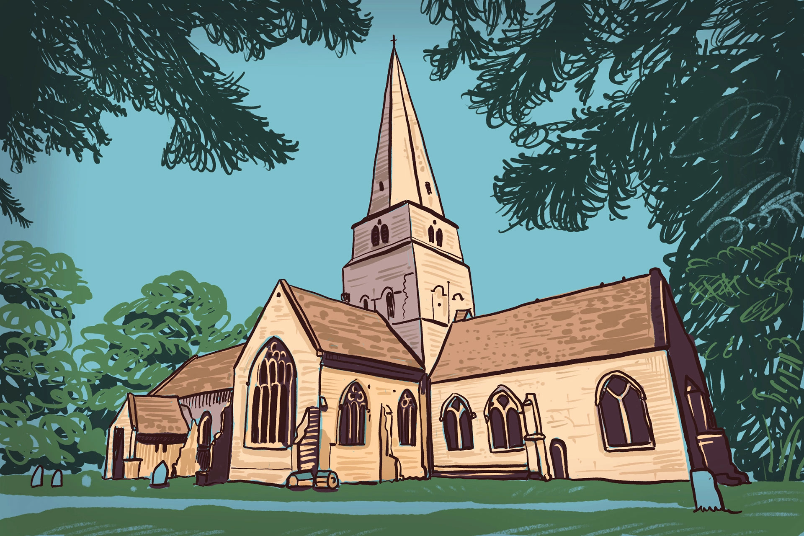

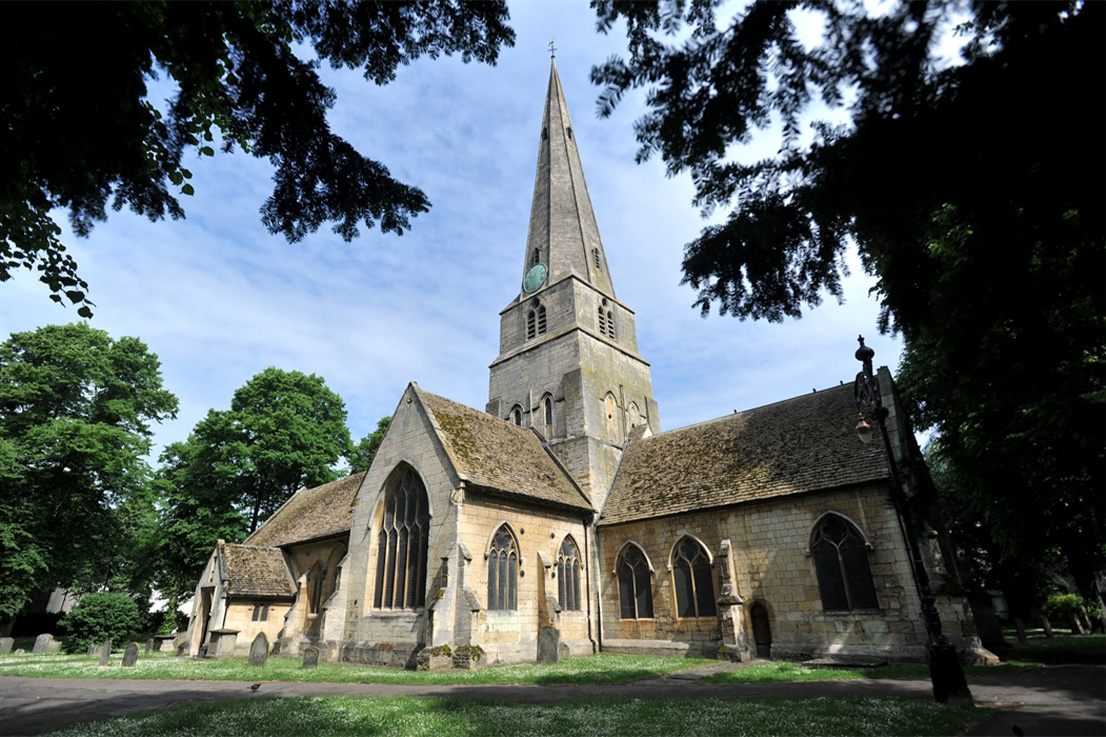
Cheltenham Minster, formerly known as St Mary’s Church, is Cheltenham’s oldest building. It has been in continuous use for more than 850 years and is the only surviving medieval building in the town. The oldest parts of the building date from shortly after 1133, possibly on the site of an earlier Anglo-Saxon minster. There is a monastery documented in Cheltenham from 773 CE. During the late 13th and 14th centuries, several additions were made to allow people from the outskirts of Cheltenham to attend communion during religious festivals.
One of the most notable features of the church is the 14th century Rose Window, found in the north transept. It features beautiful tracery, which contains a deliberate mistake, intended to symbolise the notion that only God can create things that are perfect. Most of the stained glass is from the 19th century, by noted glaziers such as Joseph Bell of Bristol.
The Minster also contains memorials to several key Cheltonians. The first is that of Henry Skillicorne who moved to Cheltenham in 1738. He is credited as being the founder of Cheltenham Spa, marketing a mineral spring at Bayshill for its medicinal properties, and for laying out the Old Well Walk. At 53 lines long, it is the longest memorial inscription in any church in Britain. A second memorial is to Francis Close, the Anglican Rector of the church from 1826 to 1856. He supported the development of a training college for teachers, and fiercely opposed horse racing – something Cheltenham had become famous for. Both Dean Close school and Francis Close Hall (part of the University of Gloucestershire) are named after him.
The Minster, Cheltenham
The Minster was a key part of life in Cheltenham that extended beyond worship. Cheltenham began as an Anglo-Saxon settlement (the name means a settlement under a steep hill). It was granted a market charter by Henry III in 1226, giving the right to hold weekly markets and an annual fair. At this time Cheltenham was little more than a single street, now the High Street, originally referred to as ‘Cheltenham Street’. The original medieval burgage plots and alleys can still be detected in the modern frontages. The markets, a meeting place for local people and those from the surrounding areas to sell their wares, took place on the street, spilling into the churchyard, where the brass markers on the pathway to the southern side of the church were used to measure lengths of cloth or rope. Cheltenham remained primarily a market town until the discovery of the spa water in the early 18th century. Regular markets are still held in the town to this day.
Renovation of the area has continued right up to today; The MX (Minster Exchange) project improved the area surrounding The Minster, including the creation of Hub8 by Plexal, a workspace dedicated to growth of the local tech community, keeping the area as a vibrant part of the town right into the 21st century.

Things to see nearby
The Wilson Art Gallery and Museum
Opened in 1899 on Clarence Street, the site was originally known as Cheltenham Art Gallery and Museum, before being renamed 'The Wilson' in 2013. The original section of the building is found alongside the Cheltenham Public Library. The building was first extended in 1990, producing a new entrance and providing further gallery space. This extension included the metal grille by Alan Evans which is still in place today. In 2007 it was decided that further space was needed to display more of the collections, and Berman Guedes Stretton was chosen to design the extension through a national architectural design competition. The extension, which today contains the main entrance and 5 galleries, won a RIBA South West architecture award in 2014. The Museum Galleries have been closed for extensive refurbishment since 2020 and are due to be reopened in Autumn 2026. The Wilson contains an extensive Arts and Crafts collection which is recognised as an outstanding collection of international importance. As well as many artefacts and documents relating to Cheltenham's history (including a collection of objects relating to Edward Adrian Wilson, Polar Explorer), and an impressive collection of modern, contemporary, and classic artworks and sculptural pieces.
Visit website'Theme and Variations' by Barbara Hepworth
Located in the Imperial Gardens, 'Theme and Variations' is one of the most significant works of public art in Cheltenham. The sculpture was created by Dame Barbara Hepworth, one of the most important British sculptors of the 20th century, and was unveiled in 1970. The work consists of four related bronze forms, each a variation on a central theme — an exploration of the relationship between interior and exterior space that was central to Hepworth's practice throughout her career. The sculpture was gifted to the town by the Cheltenham Arts Council and remains a focal point of the gardens.
Heritage Index
Interested in discovering more about the history of Cheltenham? Explore our Heritage Index for a rich collection of research, stories, and resources to help you continue your own journey into the past.
Thanks for our partners and sponsors